


Protest alone is not enough
The most realistic answer, therefore, is: yes, it is possible, but only through a broad, organized social movement capable of transforming protests into new institutions, laws, and power dynamics. Otherwise, the system can absorb the slogans, grant a few limited concessions, and essentially carry on as before. The lesson of May 1968 in France.
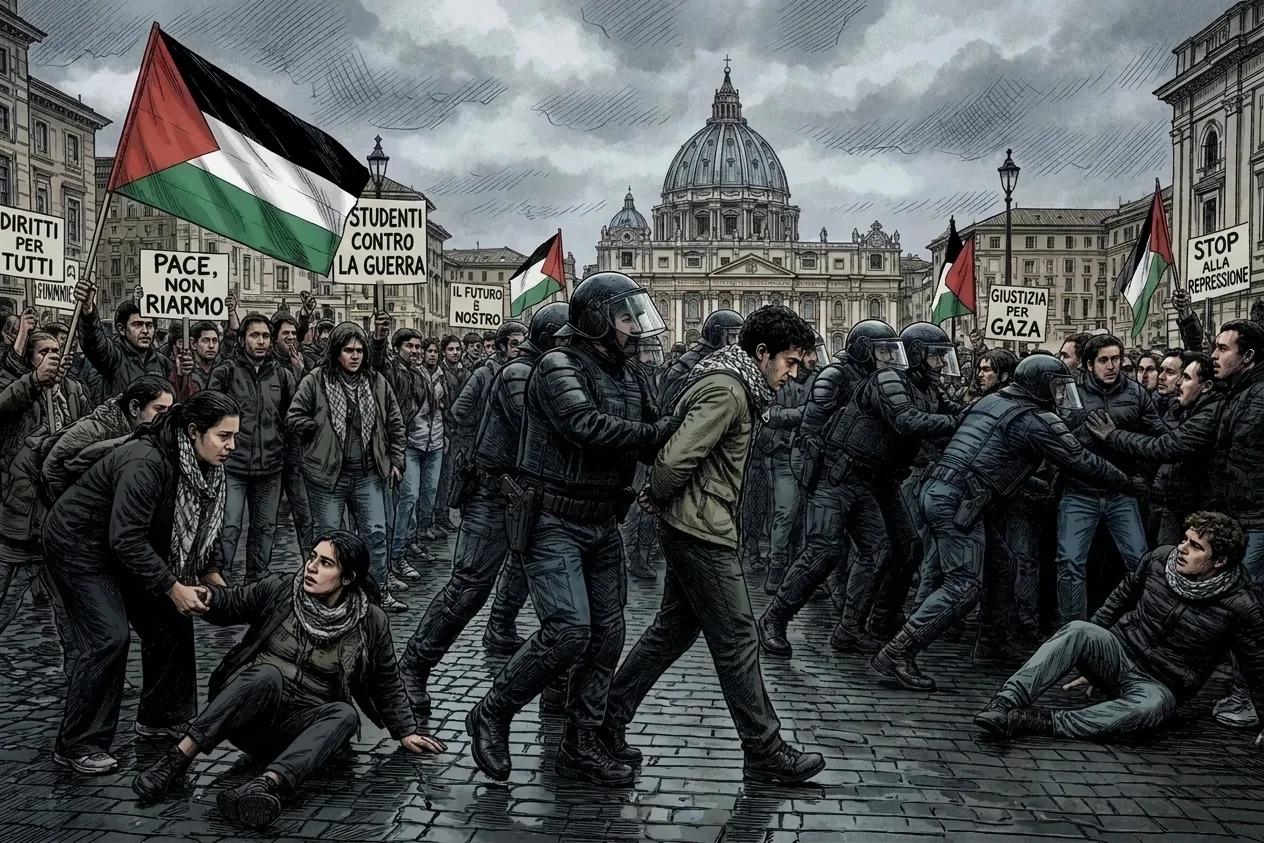
Neoliberalism can be defeated in Europe, but not simply by replacing one government with another. By “defeating” it, I mean overturning some of its fundamental priorities: the privatization of services, the precariousness of work, the subordination of politics to financial interests, permanent austerity, and the transformation of housing into a speculative asset.
The crisis of this model is evident. In the European Union, between 2013 and 2024, housing prices rose by more than 60 percent, while average rents increased by about 20 percent; roughly one in five people is still at risk of poverty or social exclusion.
Why There Is a Real Possibility these issues—housing, pensions, peace, wages, and the future of young people—can unite different generations and social groups. They are concrete, understandable issues that are difficult to reduce to a simple ideological dichotomy.
Furthermore, there are tools that can limit the power of the market: strong unions, collective bargaining, adequate minimum wages, public housing, universal healthcare and education, progressive taxation, and public control of strategic sectors. Research by the International Labor Organization shows that unions, collective bargaining, and minimum wages can mitigate the link between the concentration of economic power and wage inequality.
The fact that the European Commission adopted the first European strategy against poverty in May 2026 and proposed measures to address housing exclusion also shows that the problem can no longer be easily ignored. However, acknowledging the problem does not yet mean overcoming neoliberalism: it depends on who controls investments and whose interests are protected. (European Commission) (employment-social-affairs.ec.europa.eu)
The Crucial Point: From Protest to Social Power
Protests can break through barriers, but they are not enough on their own. To bring about lasting change, they must bring together:
▪ students and workers, rather than leaving them in separate movements;
▪ retirees and young people, because social security and the right to housing are interconnected;
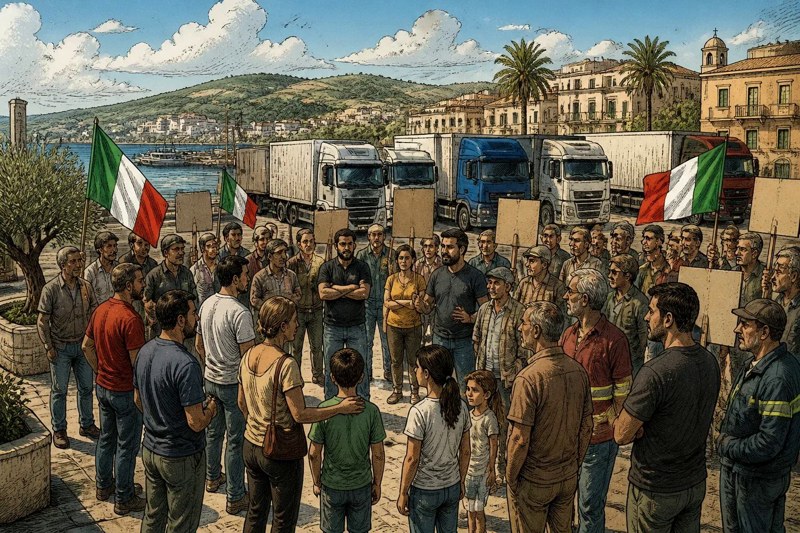
▪ truck drivers, industrial workers, and public service workers, overcoming fragmentation;
▪ anti-war struggles and social struggles, highlighting how much public money is allocated to rearmament while there is a shortage of housing, wages, and services;
▪ local movements and European coordination, because capital, finance, and large corporations operate across national borders.
Housing is a particularly important issue. The European Union itself acknowledges a significant housing investment deficit and points to the need to increase affordable and social housing; however, the European plan combines public and private investment, so it does not automatically amount to an anti-neoliberal policy.
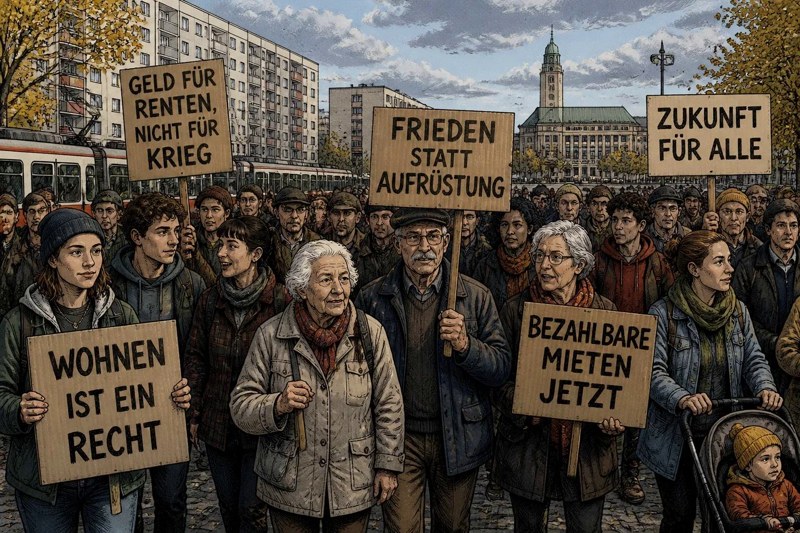
The Obstacles
The main obstacle is that discontent can be directed at the wrong targets: migrants, minorities, public employees, or other workers. In that case, social anger is channeled into nationalism and authoritarianism, while banks, the wealthy, and corporations remain off-limits.
A second obstacle is governments’ dependence on financial markets and European fiscal rules. Without a shift in budgetary priorities, many promises—public health care, pensions, affordable housing, and industrial restructuring—remain unfulfilled.
The third is the suppression of trade union and democratic space. The International Trade Union Confederation reported that in 2025, Europe reached its lowest level since the inception of its workers’ rights index, with a narrowing of the space for trade union and civil action. (ITUC/ILO) (ilo.org)
What a True Defeat of Neoliberalism Would Mean
It would not mean abolishing every market or every private enterprise. It would mean that democracy sets the limits of the market, rather than the other way around.
A coherent program should include:
▪ A European plan for public and cooperative housing, with affordable rents and an end to speculation in areas facing a housing crisis.
▪ Strengthening of collective bargaining agreements, higher real wages, a reduction in precarious employment, and greater worker power within companies.
▪ Progressive taxation of wealth, investment income, and windfall profits, with effective measures to combat tax evasion.
▪ Protection and expansion of public services, especially health care, education, transportation, energy, and social services.
▪ Industrial restructuring, so that the ecological transition creates stable jobs rather than shifting the costs onto families.
▪ An independent and diplomatic foreign policy, prioritizing conflict prevention and the protection of civilians, not the perpetual arms race.
Neoliberalism is not defeated merely by denouncing it: it is defeated when millions of organized people succeed in making housing, jobs, peace, and public services politically inevitable.
From May ’68 to October ’26
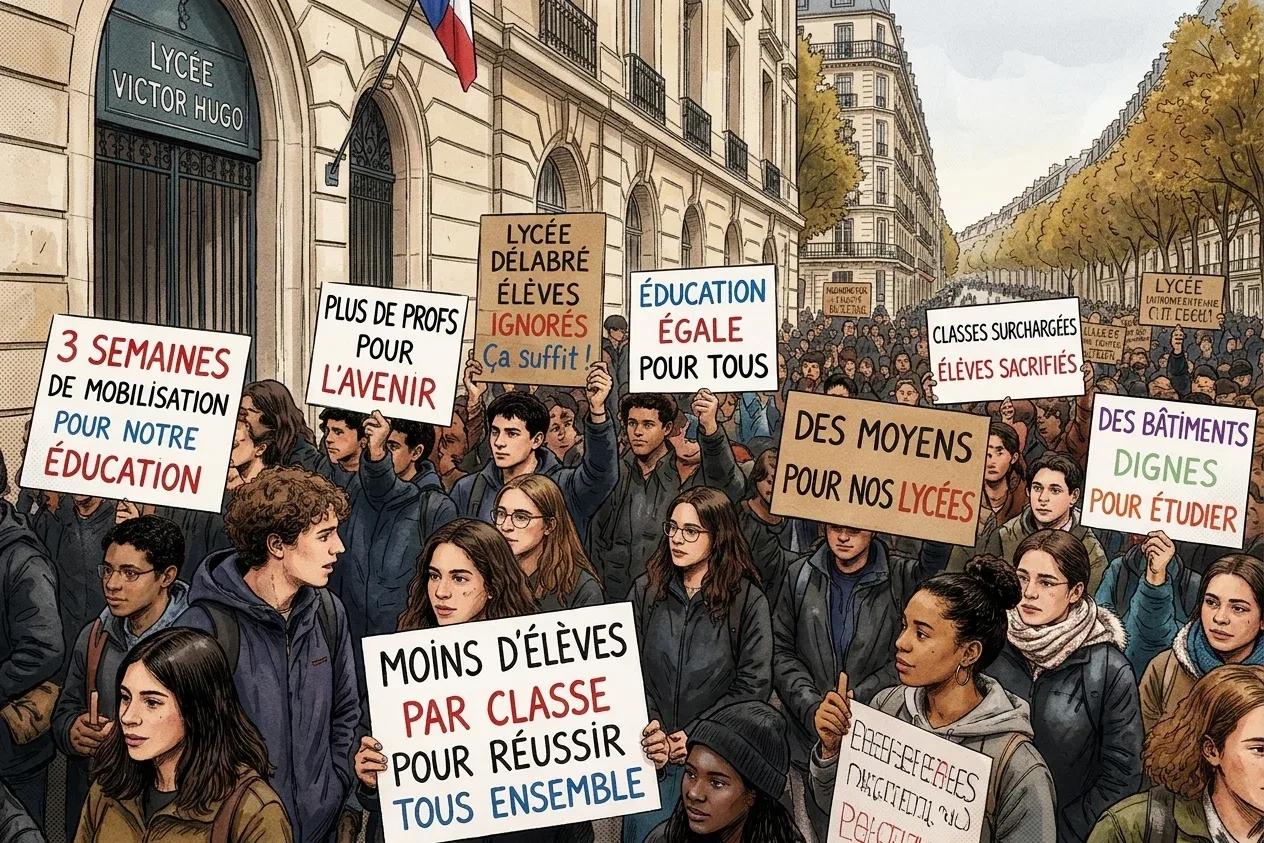
Youth protests in France are often portrayed as a clash between generations. May 1968 has become the symbol of a revolt against authority, conformism, and a society perceived as too rigid. The October 2026 depicted in the comic book draws on that collective momentum but places it in a different context: one of economic insecurity, the right to education, and the difficulty of building a stable future.
Although separated by nearly sixty years, the two movements share a fundamental commonality: young people refuse to be treated as mere spectators of the decisions that shape their lives.
May 1968: Freedom, Participation, and Rejection of Authority
In May 1968, the protest began in student and university circles, particularly at Nanterre and the Sorbonne. Students challenged an authoritarian educational system, the lack of freedom on campuses, and a social model based on rigid hierarchies.
Their protest was not limited to the university. Many young people felt that French society did not sufficiently recognize their personal, cultural, and political aspirations. They wanted to openly discuss sexual freedom, relationships between men and women, democracy in institutions, war, work, and culture.
Their primary desire, therefore, is to change the way they live and participate in society. The slogans of the era express a strong faith in imagination and in the possibility of challenging all forms of power. The protest then spreads to the working class, who bring wage demands and calls for better working conditions to the demonstrations.
October 2026: The Future as a Right
The French October depicted in the comic, on the other hand, stems from more immediate, everyday problems. The students aren’t just protesting against a symbolic authority: they’re demanding concrete solutions to high rent, job insecurity, families’ financial struggles, and cuts to public education.
Students fear they will not be able to turn their education into a path to independence. Schools and universities, which should offer opportunities, risk becoming places accessible only to those who already have sufficient financial resources.
The central motivation behind October 2026 is therefore the demand for a viable future. Young people are not merely asking for greater freedom of expression; they are demanding housing, education, work, and dignity. Their protest stems from the fear of committing themselves, studying, and working without still being able to live independently.
May 1968 asks: “How do we want to live?” October 2026 asks: “Will we truly be able to make a living from our studies and our work?”
The Main Differences
May 1968 October 2026 (imagined)
Challenges authority, conformity, and social hierarchies. It challenges precariousness, the high cost of living, and the uncertainty of the future.
It calls for a profound cultural and political transformation. It calls for material guarantees for studying, housing, and work.
It is driven by a strong revolutionary spirit. It is marked by economic concern, but also by solidarity.
It involves students and workers in a general strike. It involves students, families, precarious workers, and citizens.
It uses provocative and utopian slogans. It uses messages related to basic rights: housing, education, work, and dignity.
The Similarities
Despite their differences, the two movements share some deep-seated motivations. In both cases, young people sense a disconnect between society’s promises and their actual experience.
In 1968, the promise was of a modern society, but many students still felt bound by outdated rules. In 2026, the promise is of an education capable of guaranteeing a future, but many young people fear that merit alone is not enough without economic security.
In both cases, the protest also stems from the need to be heard. Assemblies, flyers, marches, and slogans are not merely tools of protest: they become opportunities to discover that a personal problem may be shared by thousands of people.
Conclusion
A comparison between May 1968 and October 2026 shows how youth protest changes its language along with society. In 1968, young people challenged authority and dreamed of greater freedom. In 2026, they demand that freedom be grounded in concrete realities: affordable housing, a strong public education system, and a job that provides a living wage.
The protests, however, convey the same message: when young people come together, their concerns can become a matter of public discussion and force society as a whole to reflect on its future.
 Paolo Molina.
Mai riuscito a rispondere compiutamente alle uniche importanti domande della vita: “quanto costa?”, “quanto ci guadagno?”. Quindi “so e non so perché lo faccio …” ma lo devo fare perché sono curioso. Assecondami.

